
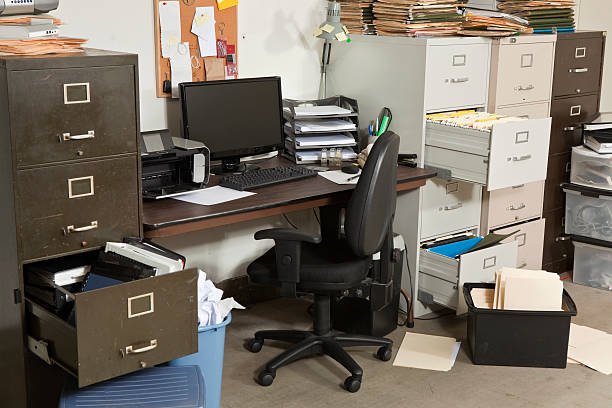
An office accumulates more than anyone budgets time for. Rows of desks and task chairs, cubicle partitions bolted together a decade ago, filing cabinets heavy with paper, boardroom tables that barely fit through the door they came in, plus a storage room of retired monitors, printers, and cables nobody ever threw out. When the lease ends, the team goes hybrid, or the company relocates, all of it has to leave — usually on a hard date written into a commercial lease.
That’s the job our office cleanout crews are built for. We dismantle workstations, break down cubicle systems, haul furniture and equipment, and separate what can be donated, resold, or recycled from what can’t. Business owners, office managers, facility teams, and commercial landlords across the Greater Toronto Area use us because we quote firmly upfront, work around business hours, and hand back a space that’s ready for the next tenant, the renovation crew, or the landlord’s walkthrough.
Commercial leases don’t negotiate. Miss the handover date and you’re paying holdover rent, forfeiting deposits, or delaying the next tenant’s fit-out — costs that dwarf the price of professional help. When a business calls us with two weeks, one week, or even 48 hours before keys are due, we build the plan around that date: crew size, truck count, elevator bookings, and, when needed, overnight or weekend shifts so your team’s final workdays aren’t spent stepping around a demolition zone.
Our trucks leave with everything the business isn’t taking: desks, chairs, cubicle panels, filing cabinets, shelving, reception furniture, kitchenette appliances, whiteboards, and the e-waste graveyard in the server closet. Furniture in good condition is channelled to charities, nonprofits, and startups that can use it; metals, electronics, and cardboard head to certified recyclers; and only true waste is disposed of. Your handover checklist gets shorter, and very little of your office ends up in a landfill.
Commercial cleanout pricing is volume-based and confirmed in writing — a number your accountant sees before our crew does the work.
Handover date approaching fast?
Call us now at +1 647 922 5865 or book online at LiveJunkFree.ca.
Call answered in 1 minute.
There’s a reason office clearances defeat DIY attempts: commercial furniture is engineered to be assembled once and never moved. Cubicle systems are bolted, wired, and interlocked. L-shaped desks won’t clear standard doorways in one piece. Loaded lateral filing cabinets can exceed a few hundred pounds each. Getting all of it down a freight elevator and into trucks takes tools, technique, and a crew that has done it hundreds of times.
Live Junk Free has cleared spaces from single private offices and dental suites to full corporate floors, coworking buildouts, call centres, and multi-tenant buildings being repositioned by their landlords. Whatever triggered the clearance — relocation, downsizing to hybrid, a closure, a renovation, or a lease surrender — we scale the operation to your square footage and your calendar.
Building logistics are handled on our side of the table. We book freight elevators and loading docks, provide certificates of insurance to property management, respect building quiet hours, and protect lobbies, corridors, and elevator cabs along the removal route. Inside the suite, workstations are dismantled systematically and staged for efficient loading, so the job wraps in hours, not days.
Every Office Cleanout Includes:
After-Hours & Weekend Office Cleanouts Available!
Evening, overnight, and weekend clearances so your team works right up to moving day
Volume-based pricing in writing — easy to approve, expense, and reconcile
COIs on file, docks and freight elevators booked, property rules followed to the letter
Crews equipped to dismantle bolted, wired, and modular systems safely
Furniture rehomed locally and electronics processed through certified recyclers
Preferred rates for facility managers and landlords clearing several suites or locations
Planned Like a Project, Executed in One Visit
Sustainable Office Furniture Disposal & Electronics Recycling
A decommissioned office shouldn’t become a hundred cubic yards of landfill:
Sustainability reporting available for companies tracking diversion targets.
Office Cleanout Cost – Transparent Quotes for Every Budget Approval
Commercial decisions need numbers that hold still:
Whatever the reason the space is emptying, we’ve cleared it before:
Send photos, a video walkthrough, or invite us for a quick site visit — whatever suits your schedule.
Receive one fixed, volume-based price covering teardown, hauling, recycling, and cleanup — ready for sign-off.
Choose business hours, after-hours, overnight, or weekend slots; we coordinate dock and elevator bookings with your building.
Our crew dismantles, hauls, sorts for donation and recycling, sweeps the space, and documents the finished condition.
From cubicle farms and packed file rooms to bare, broom-swept floor plates — see how GTA businesses handed back their spaces on time and in surrender condition.
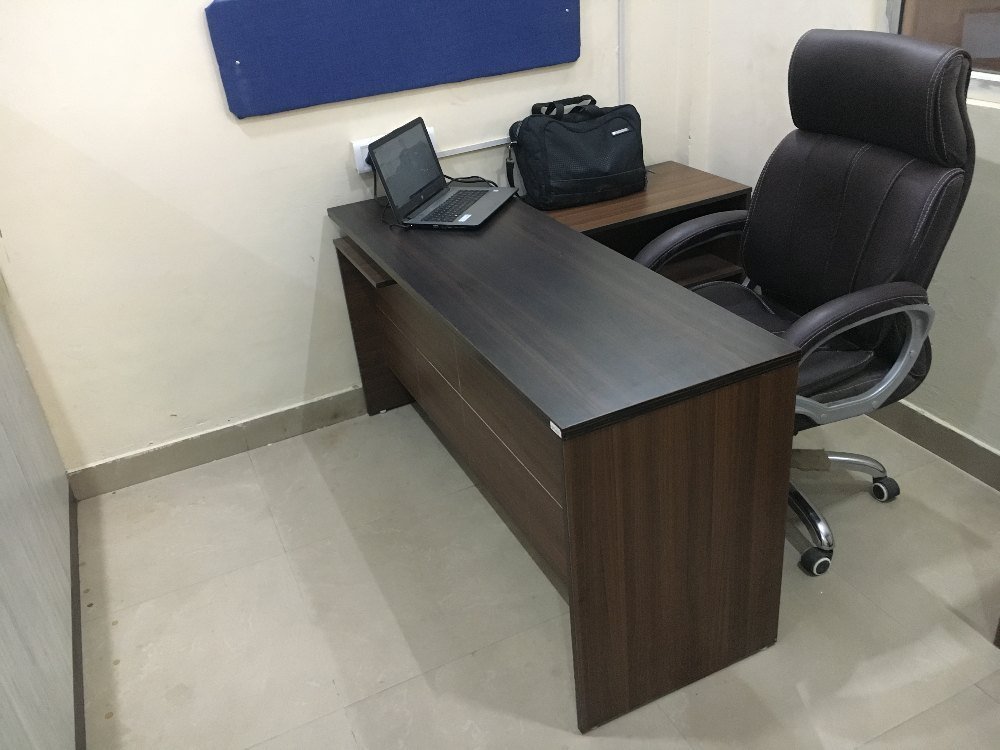
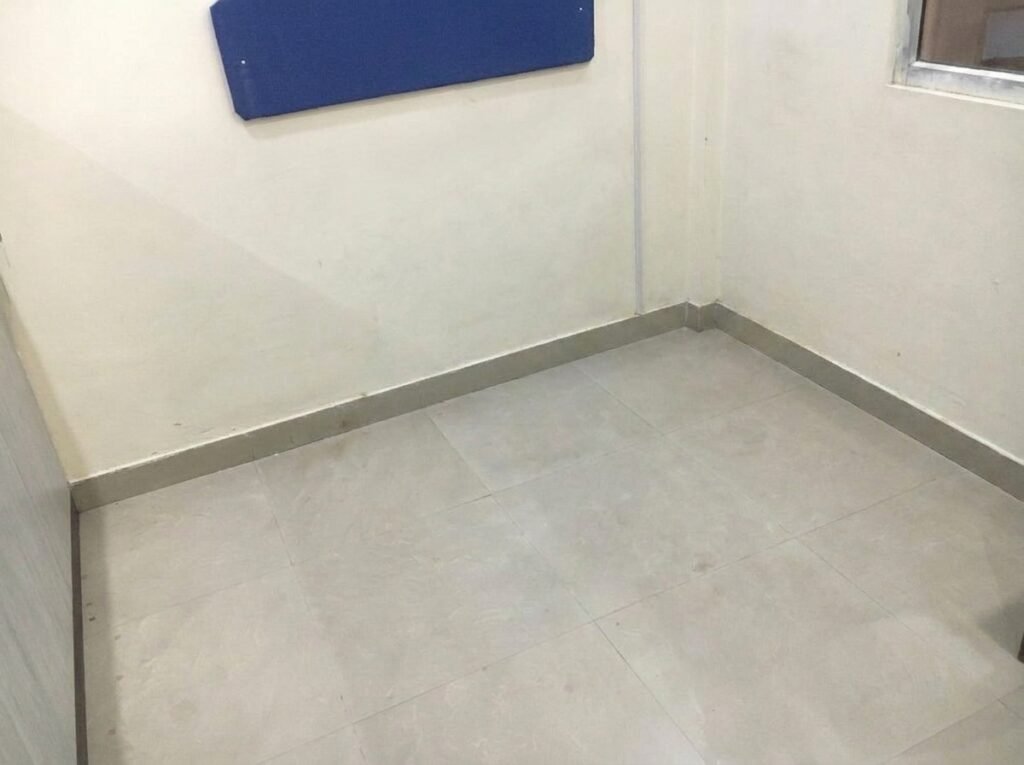
Yes — after-hours, overnight, and weekend clearances are standard for us. Many clients have their team work normally on Friday and return Monday to an empty, swept suite. We coordinate security access, alarm procedures, and building quiet-hour rules directly with property management..
Trustindex verifies that the original source of the review is Google. So friendly and amazing work they brought a huge bin into my unit and baggee garage rolled it out amazing service fast and efficientPosted on GoogleTrustindex verifies that the original source of the review is Google. These guys were great. Not only did they come on time, they picked everything I sent them in the photos. There were a couple extra pieces of wood and they took them too at no extra charge. Polite, punctual, and kind. What more could you ask for? Will definitely call them again for junk removalPosted on GoogleTrustindex verifies that the original source of the review is Google. It was an excellent service! Very professional and gently handle to remove the large and heavy water tank… highly recommended!Posted on GoogleTrustindex verifies that the original source of the review is Google. Nav and Ash got here before the designated time. That was great. They were extremely polite, and very efficient. A couch I had for 22 years was up and out the door in less than 10 min. I could not believe it! Nothing bumped or bumped off walls or anything. I'd recommend them to anyone. Experts for sure!Posted on GoogleTrustindex verifies that the original source of the review is Google. We had a great experience with LiveJunkFree! They removed all the old appliances from my daughter’s condo, and the entire process was smooth and hassle-free. The team was professional, efficient, and handled everything with care. It was such a relief to have everything taken care of without any stress. We really appreciated their service and would happily recommend LiveJunkFree to anyone looking for reliable and professional appliance removal. Thank you for making the process so easy!Posted on GoogleTrustindex verifies that the original source of the review is Google. They let me know when they were a half-hour away. They were very professional and lovely to work with.Posted on GoogleTrustindex verifies that the original source of the review is Google. Nice, professional team that was fast and efficient!Posted on GoogleTrustindex verifies that the original source of the review is Google. The two men were excellent at removing our freezer from the basement... punctual and very efficient. Thank you very much.Posted on GoogleTrustindex verifies that the original source of the review is Google. Great service. Friendly, quick, polite and called when they were 30 minutes away to let me know their ETA.Posted on GoogleTrustindex verifies that the original source of the review is Google. Nav and his partner came for a piano removal, they communicated well and were professional. Thanks for your help and coming back to put the door back, much appreciated! Would recommend to friends and family.
OFFICE CLEANOUT SERVICE AREA
Ajax • Aurora • Bolton • Bradford • Brampton • Caledon • East Gwillimbury • Etobicoke • Georgina • King City • Markham • Mississauga • Newmarket • Nobleton • Oshawa • Port Perry • Pickering • Richmond Hill • Scarborough • Schomberg • Toronto • Uxbridge • Vaughan • Woodbridge • Whitby • Whitchurch-Stouffville
Office cleanouts often involve more than removing desks and chairs. Businesses may need to deal with confidential documents, computers and e-waste, heavy furniture, lease requirements, freight elevators, after-hours access, and tight move-out deadlines. At Live Junk Free, we help businesses across the GTA remove unwanted office furniture, equipment, supplies, and other eligible materials while planning around building access and commercial schedules. Below are answers to common questions about office cleanouts, commercial decommissioning, disposal, and preparing a workspace for its next use.
A standard office cleanout should not be treated as a substitute for certified data destruction. Businesses should identify confidential documents, hard drives, servers, and storage devices before the cleanout and arrange secure shredding or certified data-destruction services when required. Ask the provider what chain-of-custody and destruction documentation they offer.
Some specialized e-waste and data-destruction providers can issue certificates documenting the destruction or processing of eligible materials. Businesses that require this documentation should confirm it before booking rather than assuming every junk removal service provides it. Live Junk Free can discuss the appropriate handling requirements for office electronics.
Businesses should first identify devices containing company or personal data and ensure data is securely removed or destroyed. Computers, monitors, networking equipment, servers, and other electronics can then be separated for appropriate recycling or specialized processing. A large e-waste project should be planned in advance because data security and material handling may require multiple service providers.
UPS units and batteries may contain materials requiring specialized recycling or hazardous-waste handling. They should not automatically be mixed with ordinary office junk. Tell the cleanout provider about batteries and UPS equipment in advance so the correct disposal method can be arranged.
Confidential records should be separated from ordinary office paper before removal. Businesses that need secure destruction should use a qualified shredding service and retain any required documentation. Employees should not assume that placing sensitive records in a recycling pile provides secure destruction.
“Broom-clean” generally refers to removing the tenant’s belongings and leaving the premises reasonably clear of loose debris. However, the exact move-out condition is determined by the lease and any landlord requirements. Businesses should review their lease carefully because some agreements may require additional repairs, fixture removal, or restoration.
This type of work can go beyond standard junk removal and may involve demolition or qualified contractors. Whether partitions, built-ins, or fixtures can be removed depends on the lease, building rules, construction, and electrical or mechanical connections. The required restoration scope should be confirmed before work begins.
Many commercial buildings require contractors to provide proof of insurance or a Certificate of Insurance before accessing the property. Requirements vary by building and property manager. Businesses should request the necessary documentation and submit it according to building procedures before scheduling the cleanout.
Building management may require advance elevator reservations, loading-dock bookings, certificates of insurance, and specific move-in or move-out times. Businesses should provide these requirements before the cleanout date. Proper scheduling helps crews move large furniture and equipment without disrupting other tenants.
After-hours and weekend availability depends on the cleanout company’s schedule and the building’s access rules. Many commercial properties also have restrictions on freight elevators, loading docks, noise, and contractor access. Contact Live Junk Free in advance to discuss scheduling options for your office cleanout.
Professional crews can plan removal routes and use appropriate moving equipment and protective measures based on the building’s requirements. Heavy or awkward furniture should be moved carefully through hallways, elevators, and doorways. Businesses should also identify fragile finishes, tight spaces, and building protection requirements before work starts.
Heavy racking and large filing systems may require dismantling, additional labour, and specialized moving equipment. The removal approach depends on the size, weight, anchoring, and accessibility of the equipment. Live Junk Free can assess commercial items and determine whether they fall within the required cleanout scope.
Sorting arrangements vary by provider. Businesses that want to sell or liquidate valuable furniture should identify those items before removal and consider a separate furniture liquidation or resale service. Items designated for removal can then be handled through appropriate reuse, recycling, or disposal channels.
Donation may be possible for clean, usable furniture and equipment when a receiving organization accepts the items. Acceptance requirements, pickup schedules, and condition standards vary. Discuss donation plans before the cleanout so eligible items can be separated from materials intended for disposal.
Cubicles and workstations can be dismantled and removed as part of an office decommissioning project. Depending on their condition and material, components may be suitable for reuse, recycling, resale, or disposal. The amount of labour required depends on the number of stations and how they are installed.
Large furniture may be dismantled into smaller components when practical and safe to do so. The removal method depends on the materials, weight, dimensions, and route through the building. Components may then be directed toward reuse, recycling, or disposal where appropriate.
Some commercial waste and recycling providers may offer reporting on material diversion. The level of detail depends on how materials are sorted and where they are processed. Businesses requiring sustainability reporting should request this capability before selecting a cleanout provider.
Some providers may offer asset-inventory support, while others focus only on removal. Businesses with detailed asset-tracking requirements should prepare an inventory or arrange a service specifically designed for asset management. This is especially important for computers, electronics, leased equipment, and high-value furniture.
Acceptance depends on the specific materials. Appliances and some office equipment may be suitable for recycling, while toner cartridges, chemicals, batteries, and other items can have separate handling requirements. Provide an item list in advance so the correct disposal options can be identified.
A multi-site project should start with a central plan covering each location’s inventory, access requirements, building contacts, timelines, and disposal needs. Assigning one company representative or project manager to coordinate scheduling can simplify communication. Each location should also be assessed for its own parking, elevator, and loading restrictions.
Medical and dental facilities can contain specialized equipment, regulated materials, patient information, and fixtures requiring qualified handling. A general junk removal company may not be able to remove every item. Businesses should identify regulated, medical, radiological, chemical, and confidential materials before arranging the cleanout.
The process usually begins by identifying furniture, equipment, fixtures, supplies, electronics, and materials that need to remain or be removed. Specialized restaurant or retail equipment may require separate handling. Building access, utilities, grease-related materials, and lease restoration requirements should also be reviewed before the project begins.
Some signs and branding materials may require specialized access equipment, electrical disconnection, or permits. A standard office cleanout may not include exterior sign removal. Businesses should confirm whether the service provider is equipped and authorized to remove the specific signage involved.
These projects require an inventory of office furniture, warehouse equipment, racking, tools, inventory, and industrial materials. The cleanout plan should separate ordinary junk from equipment requiring specialized removal. Heavy machinery, chemicals, batteries, and other regulated materials may need additional service providers.
Contact a commercial junk removal or office cleanout provider as soon as possible and explain the deadline, location, volume of materials, and building access requirements. Same-day or next-day availability depends on crew schedules and job size. Live Junk Free can discuss available options for urgent GTA office cleanout projects.
The timeframe depends on the density of furniture, number of workstations, electronics, partitions, access restrictions, sorting requirements, and number of workers involved. A large office may require multiple days, particularly when secure data destruction or detailed asset management is involved. An onsite assessment can provide a more realistic project timeline.
Some projects can be planned around separating items for relocation from items for removal. Businesses should clearly label what is moving, staying, being donated, or being discarded before the cleanout begins. Transportation to a new office may be a separate moving service, so this should be confirmed in advance.
Not always. A cleanout can sometimes proceed without a representative present if access, authorization, item instructions, and building requirements have been clearly arranged. For large or complex projects, having an authorized contact available can help resolve questions quickly.
Hazardous or regulated materials should be identified and separated before ordinary junk removal begins. Commercial chemicals and certain lamps may require specialized disposal rather than landfill disposal. Businesses should disclose these materials in advance so appropriate arrangements can be made.
Heavy safes and cabinets may require additional workers, specialized moving equipment, and careful route planning. Their size, weight, location, and building access will determine the removal method. Businesses should provide details or photos before booking so the job can be assessed properly.
Ask about commercial experience, insurance, COI requirements, after-hours availability, elevator and loading-dock coordination, e-waste handling, data security, hazardous-material limitations, donation options, project timelines, and pricing. Also ask what happens when unexpected materials or access issues are discovered during the project.
Some companies may provide limited post-removal work, while others focus strictly on junk removal and hauling. Drywall repair, electrical work, cable removal, and lease restoration may require separate qualified contractors. Confirm the complete scope of work before booking.
The property owner or authorized manager should first confirm who has legal authority over the contents and premises. Important records, personal property, leased equipment, and potentially valuable assets should be identified before disposal. Once removal is authorized, a commercial cleanout can be scheduled based on the property’s condition and deadline.
Yes, a consolidation project can involve moving designated items to the retained floor while removing unwanted furniture and equipment from the floors being vacated. Clear floor plans, labels, and item lists are important to prevent mistakes. Moving and cleanout services may be coordinated depending on the provider’s capabilities.
Businesses should establish an internal policy and confirm ownership before disposing of employee belongings. Employees may need an opportunity to collect personal property, depending on company policy and the circumstances. Once the items are legally cleared for disposal, they can be included in the office cleanout.
Cable removal may be included in certain commercial cleanout or decommissioning projects, depending on how the cabling is installed. Cabling connected to active systems, electrical infrastructure, fire-safety equipment, or other building systems should be handled by qualified professionals. The scope should be assessed before removal.
Yes, commercial cleanouts can often include storage lockers, off-site storage units, and warehouse spaces. The scope depends on the type and quantity of materials, unit access, building rules, and whether any hazardous or restricted items are present. Live Junk Free can discuss cleanout options for commercial storage spaces across the GTA.
The crew can plan removal routes, schedule noisy work strategically, and use appropriate containment or handling methods depending on the materials involved. Building management should be informed about the project and any noise restrictions. Work involving demolition or heavy dismantling may need to be scheduled differently from standard furniture removal.
Equipment can include dollies, hand trucks, furniture carts, lifting straps, protective materials, and other tools appropriate for the items being moved. Larger projects may require specialized equipment depending on weight, dimensions, and building access. The right equipment helps improve efficiency while reducing the risk of property damage.
Yes, the cleanout can be scheduled around a lease-end, listing, or showing deadline. Once unwanted furniture, equipment, and debris are removed, the property may be ready for the next stage of cleaning, repairs, staging, or inspection. Coordinating the cleanout timeline with the landlord, property manager, or real estate representative can help make the transition smoother.
Whether it’s household junk, construction debris, or yard waste, we handle it all responsibly, recycling and disposing of items in an eco-friendly manner. Experience hassle-free junk removal with Live Junk Free and reclaim your space today!”
Whether it’s household junk, construction debris, or yard waste, we handle it all responsibly, recycling and disposing of items in an eco-friendly manner. Experience hassle-free junk removal with Live Junk Free and reclaim your space today!”
© 2026 Livejunkfree.ca | Powered By Live Junk Free